I Lost My Service Dog. Here's What Disability Pride Is Really Asking of Us.
July is Disability Pride Month. And this year, I'm marking it differently.
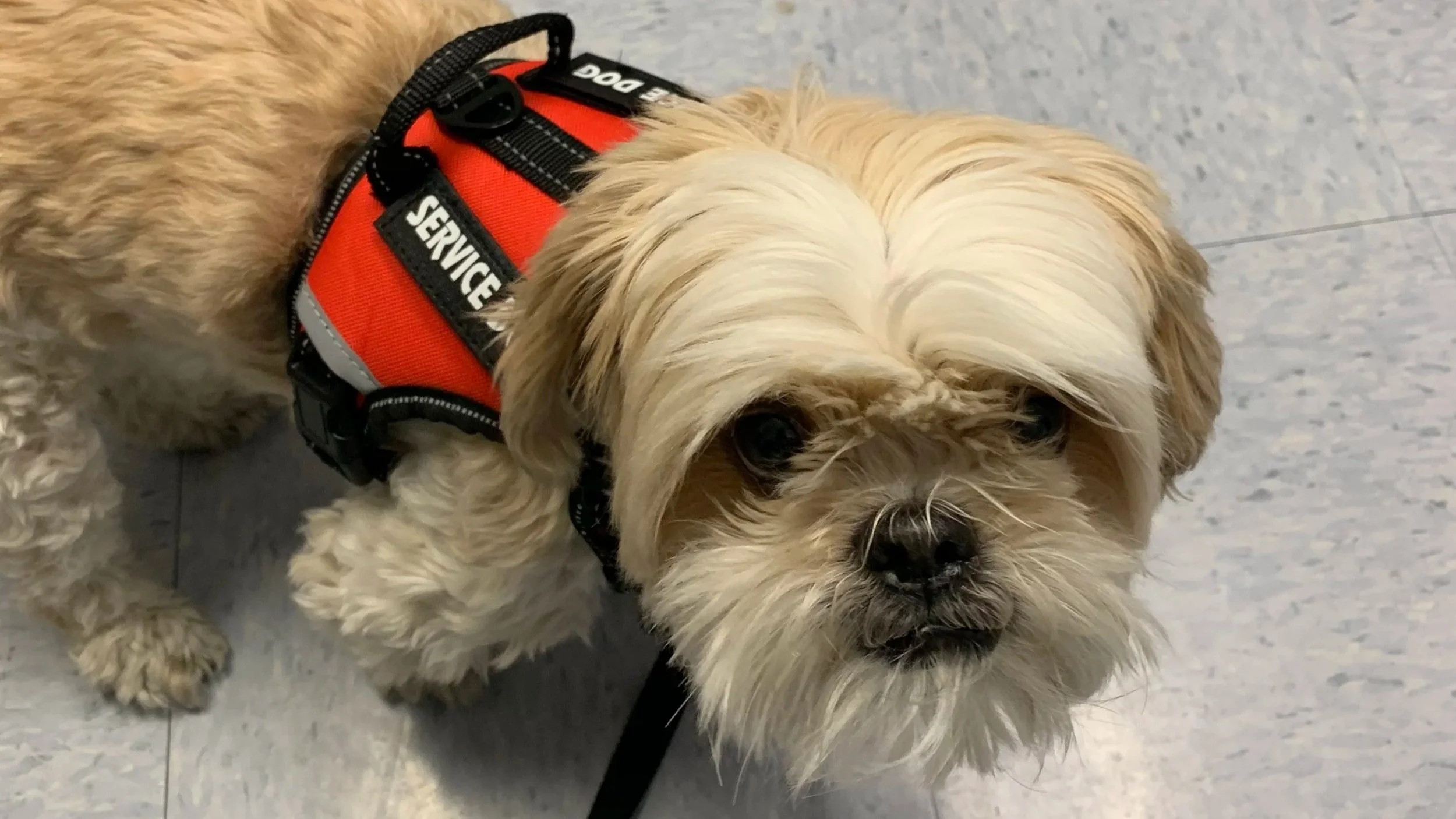
I recently lost my service dog, Hansyn. He died of cancer. And losing a service dog isn't like losing a pet. It's a renegotiation of your entire nervous system. It's relearning what safety feels like in a mind and body that already had to fight for it. It's a visible loss that makes an invisible disability suddenly, uncomfortably visible.
And in the middle of sitting with all of that, I kept thinking about the nonprofit sector. About how many of us show up to lead — to strategic planning sessions, board retreats, donor meetings, staff evaluations — while managing something no one in the room knows about, or would think to ask about, or that we might not even want to personally disclose. About how rarely any of that is named.
Disability Doesn't Disappear When You Come into the Room
Disabled leaders exist. We are executive directors, frontline staff, consultants, program managers, development directors, board chairs. We move through the sector doing the work — and we do it while managing conditions, accommodations, and systems that were not designed with us in mind.
The nonprofit sector loves to talk about centering the communities it serves. But who actually counts as community?
Disability Pride Month asks us to sit with awareness. Not the framing of disability as a challenge, but considering that people with disabilities exist in leadership, and the cultures we've built either make space for that or they don't.
DEIB Has More Work to Do on Disability
Disability justice is growing within diversity, equity, inclusion, and belonging (DEIB) work — and that matters. More organizations are naming it, more frameworks are making room for it, and more leaders are bringing it into the conversation. And there's still a significant gap.
I've sat in a lot of DEIB conversations. Led a lot of them. And disability justice still tends to arrive later in the agenda — after race, gender, and sexuality have already consumed the room — or it shows up as policy language rather than lived practice.
Most DEIB frameworks were built to address racism and other specific, historical, institutionalized forms of oppression. That work is essential and ongoing. But the frameworks were not built with disability justice at the center.
So here’s what gets left out: the way ableism shapes who gets to lead. The way urgency culture is, itself, a disability access issue. The way "bringing your whole self to work" rings hollow when the whole self includes chronic illness, neurodivergence, mental health conditions, or mobility needs — and the organization hasn't done the structural work to actually hold any of that.
We ask disabled leaders to perform wellness they don't have, in spaces that weren't built for them, while we put their communities on our mission statements.
What Grief Taught Me About Invisible Labor
When you have a service dog, people see the dog. The vest, the training, the way the dog moves with you. What they don't see is everything the dog was and is doing — the neurology, the nervous system, the hundred small recalibrations that happen before you walk into a room and appear fine. Losing a service dog means doing visible work to appear the way you always appeared — except now you're doing it without the support structure that made it possible. And unfortunately, that's the experience of a lot of disabled leaders, all the time.
We do invisible labor to appear functional in systems that weren't designed for us. We manage, adapt, compensate, and recalibrate — and because we do it well, it stays invisible. And because it stays invisible, the sector never has to reckon with what it's actually asking us to carry.
Disability Pride is a Structural Demand, Not Just a Checklist of Items
Here's where I want to push a little, because some of this might already feel familiar. Maybe your organization sends agendas in advance for neurodivergent team members. Maybe your building is wheelchair accessible. Maybe you have an accommodations policy that people can actually find. That’s a great start. But consider this:
I was leading a healing retreat for a progressive nonprofit. Everyone had been informed in advance that I have a service dog. At lunch, I walked in with him to grab a plate — we were in that room for maybe ten minutes total, and he wasn't eating, he was doing his job. Afterward, my client came to me quietly and said he'd heard a few complaints. People were uncomfortable with a dog in the space where food was being served.
I understand that. Some people are genuinely uncomfortable around animals — any animals — near food. And people with service animals know this, which is why we often eat outside or skip eating altogether rather than make anyone uncomfortable.
But here's what happened next: before the next session, I stood up and reminded the room that yes, my dog is a service dog. I felt like I had to explain myself. And even as I did it, I felt guilty — guilty for disrupting the experience of the people I was there to serve.
I still feel that guilt. Even now, writing this.
That's what ableism does in progressive spaces. It doesn't always show up as hostility. Sometimes it shows up as discomfort that gets passed along — quietly, carefully — until the disabled person in the room is managing everyone else's feelings about their access needs. In a space that already knew and had said yes to accommodating my service dog.
The reality is that Disability Pride Month is asking something harder: what happens after we do the bare minimum? Are disabled leaders advancing in an organization — or quietly leaving because the cost of staying became too high? Are accommodations something people feel safe requesting, or something they fear will change how they're perceived? Is neurodivergence welcomed in how you run meetings, or just technically permitted? Is your DEIB work actually interrogating ableism as a system — the pace, the culture of overwork, the unspoken expectation of always-on availability — or has it addressed the most visible access needs and moved on?
The question isn't whether you've done something. It's whether what you've done has changed the conditions for disabled people inside your organization — at every level, including leadership.
What It Looks Like When Leaders Get This Right
The leaders doing this well aren't waiting for a disabled staff member to ask for something before they think about access. They're building cultures where disclosure isn’t forced and at the same time, doesn't feel like a risk. Where accommodations are normalized, not exceptional. Where the pace of work is humane enough that people don't have to choose between their health and their seat at the table.
They're treating disability justice not as a line item in the DEIB plan but as a lens — asking who's missing from the room, and why, and what the organization would have to change to make it possible for them to lead.
They're also doing the internal work: examining how ableism shows up in what gets rewarded, what gets read as "professionalism," and who gets the grace to be imperfect and still move forward.
That work is possible. Organizations are doing it. And Disability Pride Month is a useful moment to ask honestly where yours stands.
🔥 Firebrand Challenge
This Disability Pride Month, look at your DEIB framework and ask where disability justice lives — not as an accommodation policy, but as a structural commitment that runs through how you hire, develop, and retain leaders.
Ask who might be doing invisible labor right now to appear fully functional in a system that wasn't built for them. Ask whether disabled people in your organization are advancing — or surviving.
And then ask what it would take to build something they don't have to survive.